Today, on World Autism Awareness/Acceptance Day, the Memphis Police Department recognizes this year’s theme, “Autism and Humanity – Every Life Has Value.” Throughout the month, many MPD officers are wearing autism awareness pins as a visible reminder of the department’s commitment to understanding and supporting individuals on the autism spectrum.
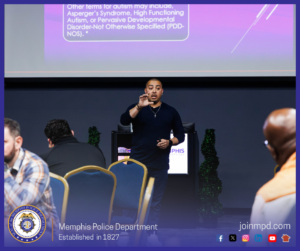
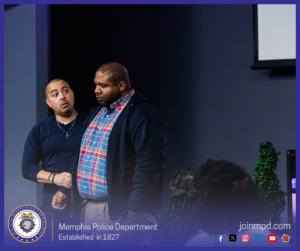
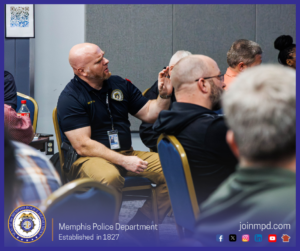
A key part of our commitment is ongoing training led by retired MPD Officer Hannah. He returns weekly to educate officers on autism awareness and response. His instruction helps officers better identify, relate to, and assist individuals with autism during encounters in the community.
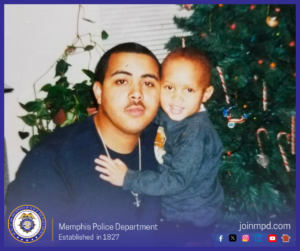
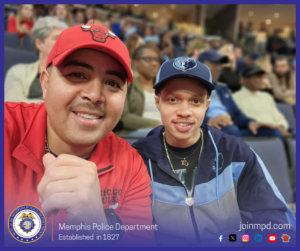
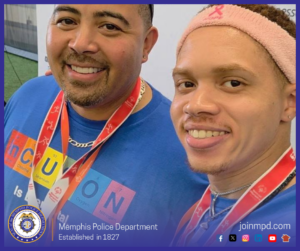
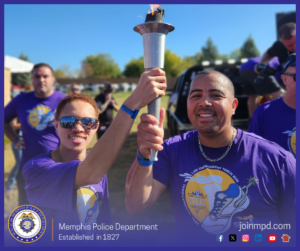
For Hannah, this work is deeply personal. His son, Alex, was diagnosed with autism at a young age. He shares that the diagnosis was initially difficult to accept as a father, but over time, that perspective has transformed into pride. Today, he speaks openly about Alex’s accomplishments and independence. Alex has appeared in a movie, danced on the court at FedEx Forum during a Memphis Grizzlies game, and frequently travels with his father. Together, they are actively involved with Special Olympics Greater Memphis, demonstrating that autism does not define limitations.
During his training sessions, Hannah helps officers recognize common behaviors and characteristics that individuals with autism may exhibit. He explains that some individuals may avoid eye contact, prefer to be alone, or have limited verbal communication. Others may have a high tolerance for pain, respond differently to lights or sounds, or seek sensory stimulation such as deep pressure. Repetitive movements, such as hand or finger motions, walking on toes, or repeating words and phrases, may also be present. Officers are reminded that individuals may communicate differently, attach meaning to certain objects, or react in ways that may not be immediately understood.
In addition to recognizing behaviors, Hannah provides practical guidance for officers responding to calls involving individuals with autism. He emphasizes the importance of speaking calmly and using short, direct phrases while avoiding slang. Officers are encouraged to allow extra time for responses, listen carefully for key words, and understand that communication may look different. Taking a slow, patient approach is critical, as is limiting communication to one officer when possible and breaking tasks into simple steps. Preparing individuals for what will happen next and avoiding sudden changes can help reduce stress, while tools such as sensory items may assist in calming and communication.
Hannah’s training blends professional experience with personal insight, giving officers a deeper understanding of how to approach these interactions with compassion, patience, and respect.
He often concludes his sessions with a reminder that guides both his work and the department’s approach: “Autism doesn’t need to be fixed, it needs to be understood.”